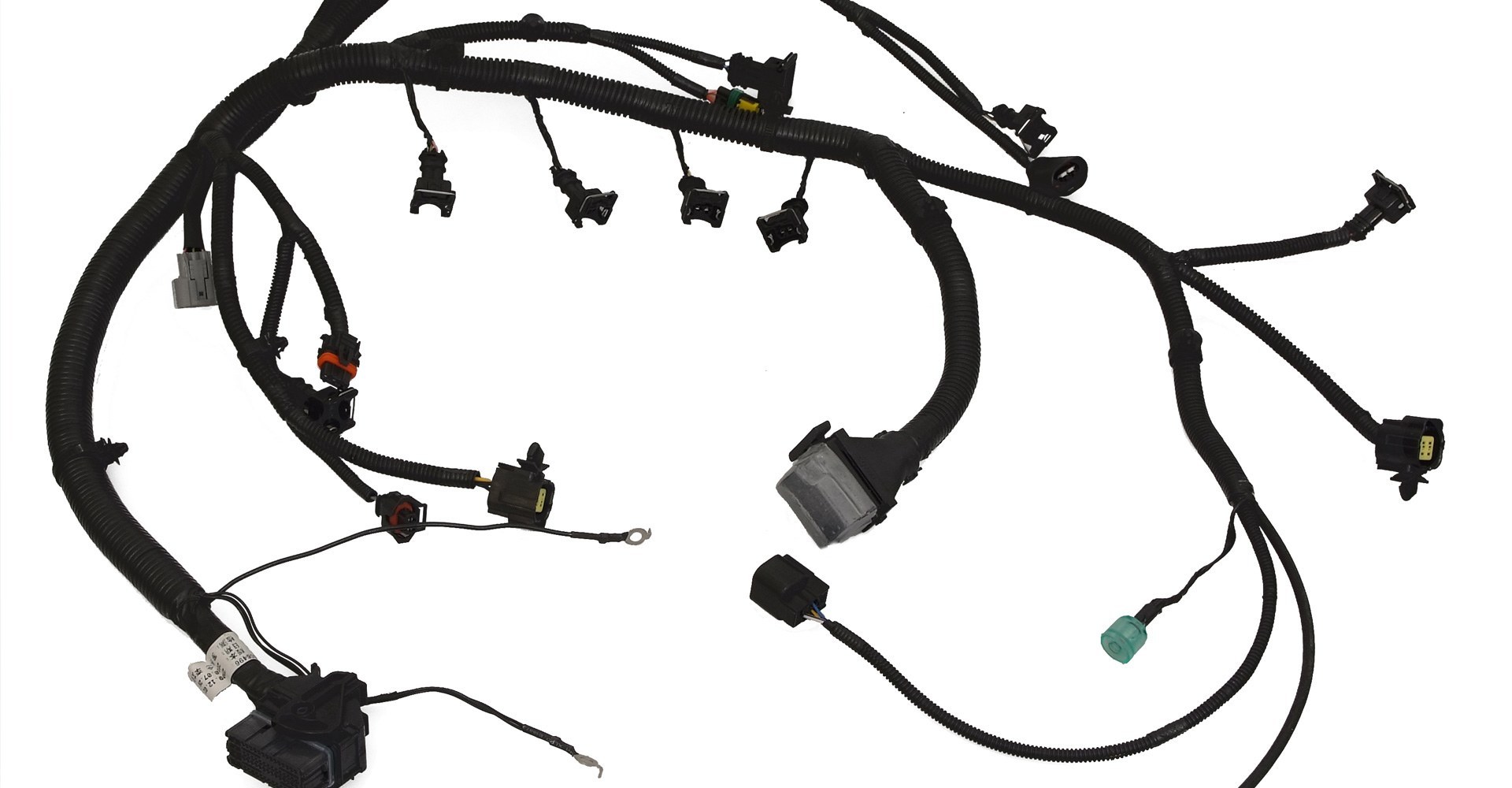
As per MRFR analysis, the Automotive Wiring Harness Market Size was estimated at 54766.5 USD Million in 2024. The Automotive Wiring Harness industry is projected to grow from 57176.23 USD Million in 2025 to 87946.89 USD Million by 2035, exhibiting a compound annual growth rate (CAGR) of 4.4% during the forecast period 2025 – 2035.
Market Overview
The automotive wiring harness is the central nervous system of a modern vehicle—an integrated assembly of wires, connectors, terminals, fuses, relays, and protective sleeving that transmits electrical power and signals to every electrical and electronic component throughout the automobile. From the engine control unit (ECU) and transmission sensors to infotainment screens, advanced driver-assistance systems (ADAS), lighting, climate control, power windows, and battery management systems in electric vehicles (EVs), the wiring harness is the essential conduit that enables all vehicle functions. A typical modern internal combustion engine (ICE) vehicle contains approximately 1.5 to 2.5 kilometers of wiring, 1,500 to 3,000 individual wires, and hundreds of connectors. Electric vehicles, with their more complex high-voltage architectures and extensive sensor suites, require even more sophisticated wiring harnesses, including specialized high-voltage cables for battery-to-motor power transmission. The market has historically been characterized by labor-intensive manufacturing processes, but increasing vehicle electrification, the proliferation of electronic content, and the shift toward zonal and modular architectures are fundamentally reshaping the industry.
Several powerful growth drivers are propelling the Automotive Wiring Harness market forward. The most significant driver is the relentless increase in electronic content per vehicle. Modern vehicles feature dozens of ECUs, multiple sensors (cameras, radar, lidar, ultrasonic), high-resolution displays, premium audio systems, connectivity modules (4G/5G, V2X), and ADAS features that require exponentially more wiring and connectors than older models. A second major driver is the global transition to electric vehicles. EVs require high-voltage cabling (typically 400V or 800V) to connect the battery pack to the inverter and electric motor, as well as extensive low-voltage harnesses for auxiliary systems. The number of wire connections in an EV can be 30-50% higher than in an equivalent ICE vehicle. Third, the growing demand for vehicle lightweighting to improve fuel efficiency and extend EV range is driving innovation in materials, including aluminum wires (replacing heavier copper), thinner insulation materials, and optimized harness routing. Fourth, the increasing complexity of vehicle architectures, including the shift from distributed ECUs to domain controllers and zonal architectures, is changing harness design, potentially reducing overall length but increasing connector density and data transmission requirements.
Key industry trends include the adoption of aluminum wire harnesses, particularly in European luxury vehicles and EVs, offering weight savings of 40-50% compared to copper, though requiring specialized termination and corrosion protection technologies. Another trend is the shift toward modular and zonal wiring architectures, where the vehicle is divided into physical zones (front, rear, left, right), each with its own local controller, reducing the length and weight of the main harness trunk. The use of flat flexible cables (FFC) and flexible printed circuits (FPC) in space-constrained applications (e.g., door modules, steering wheels) is growing. Additionally, the trend toward higher voltage systems (48V mild hybrids, 800V EVs) requires upgraded insulation and connector designs.
Technological developments are transforming harness design and manufacturing. 3D CAD and digital twin tools allow full vehicle wiring simulation before physical prototypes, optimizing routing and detecting interference early. Automated manufacturing processes, including wire cutting, stripping, crimping, and even some assembly steps, are increasing quality consistency. Laser marking and RFID tagging of harnesses and connectors improve traceability for quality control and service. The development of “smart” or “active” harnesses with embedded electronics (e.g., local intelligence for power distribution) is emerging. Additionally, wireless communication technologies (e.g., replacing wires between certain modules with short-range wireless) are being explored to reduce harness complexity, though widespread adoption is years away.
Policy and regulatory influence includes safety standards (e.g., ISO 26262 functional safety, flammability standards like FMVSS 302, UL 94), which dictate wire insulation materials and connector designs. Emissions regulations indirectly drive lightweighting and electrification, increasing harness content per vehicle. The EU’s ELV (End-of-Life Vehicle) Directive mandates recyclability of materials, influencing choices of insulation and sheathing. In the EV space, high-voltage safety standards (e.g., IEC 61851, ISO 6469) govern the design of orange high-voltage cables, connectors, and interlock systems.
The demand outlook for the Automotive Wiring Harness market is positive and resilient. The market is not highly cyclical because even during periods of lower vehicle production, the increasing electronic content per vehicle (the “wiring harness intensity”) continues to rise. The ICE to EV transition is a net positive for harness suppliers, as EVs require more harness content (by value) than equivalent ICE vehicles. The aftermarket for replacement harnesses, particularly for older vehicles and collision repair, provides a stable secondary revenue stream.
 Get Free Sample Report for Detailed Market Insights:
https://www.marketresearchfuture.com/sample_request/2408
Market Segmentation
By Vehicle Type
The market is segmented into Passenger Cars, Light Commercial Vehicles (LCVs), and Heavy Commercial Vehicles (HCVs). Passenger cars dominate the market in terms of volume and value, driven by the highest production volumes and the most rapid adoption of advanced electronics. Within passenger cars, the luxury and premium segments command the highest harness value per vehicle. LCVs and HCVs have simpler harness architectures historically, but the adoption of fleet telematics, safety systems (e.g., automatic emergency braking required in many markets), and increasingly electrified powertrains (e.g., electric delivery vans, hybrid trucks) is increasing harness content in these segments.
By Component
Segmentation includes Wires & Cables, Connectors & Terminals, Fuses & Relays, and Protective Sleeving/Tubing. Wires & Cables constitute the largest segment by value, with copper being the dominant conductor material, though aluminum is gaining share. This segment includes both low-voltage (typically 12V/24V) and high-voltage (EV) cables. Connectors & Terminals are critical for reliability and are a significant source of failure if improperly designed or manufactured. The shift to smaller, high-density connectors (e.g., USCAR, HSD, FAKRA for coaxial and high-speed data) is a notable trend. Protective sleeving (corrugated tubes, braided sleeving, tape wraps) protects against abrasion, heat, moisture, and vibration, with specialized materials for engine compartment (high temperature) and EV battery pack applications.
By Material
Segmentation includes Copper Wire Harnesses and Aluminum Wire Harnesses. Copper has historically dominated due to its excellent conductivity, ductility, and reliability. However, copper is heavy (density 8.96 g/cm³) and subject to price volatility. Aluminum (density 2.70 g/cm³) offers weight savings of 40-50% for the same electrical conductivity (aluminum requires larger cross-section, but net weight is lower). Challenges with aluminum include lower tensile strength, higher thermal expansion, oxide layer formation causing connection resistance, and galvanic corrosion when in contact with copper. These challenges have been addressed through specialized connectors, welding techniques (ultrasonic welding), and anti-corrosion coatings. Aluminum harnesses are most common in European premium vehicles (BMW, Audi) and some EVs.
By Application
Key applications include Engine & Transmission Harness, Body Harness, Chassis & Safety Harness, HVAC Harness, Infotainment Harness, and High-Voltage EV Harness. The Engine & Transmission Harness is typically the most complex and robust, operating in high-temperature, high-vibration environments. The Body Harness handles lighting, power windows, central locking, seats, and other convenience features. The Chassis & Safety Harness includes ABS/ESC sensors, airbag wiring, and ADAS sensor connections. The High-Voltage EV Harness is the fastest-growing segment, connecting the battery to the inverter, motor, on-board charger, and high-voltage components (heater, AC compressor), with stringent orange coloring and touch-proof connector safety requirements.
By Region
Geographically, the market is analyzed across North America, Europe, Asia-Pacific, and the Rest of the World. Asia-Pacific is the largest market, driven by massive vehicle production in China, Japan, India, and Southeast Asia. Europe is a technologically advanced market, leading in aluminum harness adoption and high-performance luxury vehicles.
 You can buy this market report at:
https://www.marketresearchfuture.com/checkout?currency=one_user-USD&report_id=2408
Regional Analysis
Asia-Pacific
Asia-Pacific is the largest and fastest-growing regional market for automotive wiring harnesses, driven by the concentration of global vehicle production. China is the world’s largest vehicle producer and the largest EV market, creating enormous demand for both low-voltage and high-voltage harnesses. Japan and South Korea are home to major harness manufacturers (Sumitomo, Yazaki, Furukawa) and automotive OEMs (Toyota, Honda, Nissan, Hyundai, Kia), with a strong focus on quality and advanced manufacturing automation. India is a growing production hub, particularly for small cars and entry-level vehicles, where cost-optimized harness designs are critical. Southeast Asian countries (Thailand, Indonesia) are important for pickup truck and motorcycle production, with associated harness demand. The region also has a dense network of tier-2 and tier-3 harness suppliers, particularly in China and Vietnam.
Europe
Europe is a technologically advanced market, leading in aluminum wire harness adoption for weight reduction, driven by strict CO2 emission targets and premium vehicle manufacturers (German OEMs: BMW, Mercedes-Benz, Audi, Porsche). The region is also at the forefront of the EV transition, with aggressive phase-out dates for ICE vehicles driving investment in high-voltage harness production. Eastern European countries (Poland, Romania, Czech Republic, Hungary) are major production hubs for wiring harnesses, benefiting from lower labor costs than Western Europe while maintaining proximity to German assembly plants. Key harness manufacturers (Leoni, Kromberg & Schubert, Delphi) have significant operations in the region. The aftermarket in Europe is well-developed, with a strong independent distribution network.
North America
North America is a mature market, with vehicle production concentrated in the US-Mexico-Canada (USMCA) trade corridor. The US produces a mix of light trucks, SUVs, and passenger cars, with a strong emphasis on pickup trucks (Ford F-Series, Ram, Chevy Silverado), which have unique harness requirements for towing, off-road lighting, and heavy-duty electrical systems. Mexico has become a major production hub for wiring harnesses, exporting to the US and globally, benefiting from competitive labor costs and trade agreements. The shift to EVs (Tesla, Ford, GM, Rivian) is driving new high-voltage harness production facilities in the region. The aftermarket for collision repair harnesses is substantial, driven by the high average age of the US vehicle fleet.
Rest of the World
This region includes Latin America (Brazil, Mexico, Argentina), the Middle East (Turkey, Iran), and Africa (South Africa, Morocco). Brazil is the largest market in Latin America, with vehicle production for domestic consumption and export. Morocco has emerged as a significant automotive manufacturing hub, with wiring harness production for European OEMs benefiting from proximity and trade agreements. Turkey has a growing automotive component industry, including harness manufacturing. South Africa has a smaller but established automotive assembly and component industry. These markets are generally characterized by lower technology content in harnesses (fewer advanced features, less aluminum adoption) and greater sensitivity to labor costs.
Competitive Landscape / Key Players
The Automotive Wiring Harness market is relatively concentrated, dominated by a few large Japanese and European tier-1 suppliers, alongside numerous regional and local players. Key global players include Yazaki Corporation (Japan), Sumitomo Wiring Systems (Japan, part of Sumitomo Electric Industries), Aptiv PLC (Ireland, formerly Delphi Automotive), Leoni AG (Germany, currently restructuring), Furukawa Electric Co., Ltd. (Japan), Lear Corporation (USA), Fujikura Ltd. (Japan), PKC Group (Finland, part of Motherson Sumi Systems), and Kromberg & Schubert (Germany). Competition is based on manufacturing cost and efficiency (wiring harness assembly is labor-intensive), engineering and design capability (3D CAD, simulation), quality and reliability (zero-defect culture is critical), global footprint (proximity to OEM assembly plants), and relationship with OEMs (long-term contracts and just-in-time delivery). Key strategic developments include vertical integration into connector and terminal manufacturing, investment in automated assembly equipment to reduce labor dependency, expansion of production in low-cost regions (North Africa, Eastern Europe, Southeast Asia), and development of high-voltage EV harness capabilities.
Latest Industry News & Developments
-
High-Volume Aluminum Harness Program Launch: In early 2025, a major Japanese harness manufacturer announced a production contract with a European premium OEM for a high-volume aluminum wiring harness program, utilizing new corrosion-resistant connector technology and ultrasonic welding processes, representing a significant scale-up beyond previous niche aluminum applications.
-
Automated Harness Assembly Facility Investment: A leading European tier-1 supplier announced a €150 million investment in a highly automated wiring harness assembly facility in Morocco, featuring robotic wire preparation, automated crimping, and AI-assisted visual inspection, designed to reduce labor costs and improve quality consistency for EV harness production.
-
800V High-Voltage Harness Certification: A major connector manufacturer received industry certification for its new 800V high-voltage connector system, capable of handling 500A continuous current with enhanced creepage and clearance distances and integrated temperature sensing, supporting the next generation of ultra-fast charging EVs.
Market Challenges & Opportunities
Key Challenges include the high labor intensity of traditional harness assembly, which makes the industry vulnerable to rising wages in key production regions (China, Eastern Europe, Mexico). The complexity of harness design and manufacturing increases with each new vehicle feature, creating risk of errors and warranty claims. Raw material price volatility, particularly for copper (which can fluctuate 20-40% annually), directly impacts profitability. The shift to zonal vehicle architectures, while ultimately beneficial, may disrupt existing harness designs and supplier relationships in the transition period. Additionally, the trend toward wireless communication replacing some wired connections (e.g., wireless battery management systems, wireless sensors) could reduce harness content in the very long term.
Emerging Opportunities are significant. The EV transition is the single largest opportunity, requiring new high-voltage harness designs and dedicated production capacity. Lightweighting through aluminum adoption offers competitive differentiation for suppliers that master the technical challenges. The trend toward modular and zonal architectures, while disruptive, also creates opportunities for suppliers to move up the value chain, supplying complete “corner modules” or “zone harness assemblies” rather than individual wires. The growing complexity of ADAS and autonomous driving systems (cameras, radar, lidar, high-speed data) requires specialized shielded cables and high-speed connectors, a higher-margin product segment. Additionally, the aftermarket for high-voltage harness repair and replacement is an emerging service opportunity as EVs age.
Future Market Potential
The long-term potential of the Automotive Wiring Harness market is inextricably linked to the future of vehicle electronics and electrification. Despite predictions of wireless replacing wires, the near-to-mid term (through 2035) will see increasing harness content per vehicle as autonomy, connectivity, and electrification features proliferate. The market will undergo a significant transformation from labor-intensive, commodity-like wiring bundles to more technologically sophisticated, content-rich assemblies. The most successful suppliers will be those who master aluminum technology, high-voltage safety, high-speed data transmission, and automated manufacturing. While copper will remain the dominant conductor for the foreseeable future, aluminum will steadily gain share, particularly in Europe and in EVs. The industry’s center of gravity will continue shifting toward Asia for production volume, but design and engineering will remain distributed globally.
To explore more market insights, visit us at:
https://www.marketresearchfuture.com/reports/automotive-wiring-harness-market-2408
Final Market Summary
In summary, the global Automotive Wiring Harness market is on a steady growth path, projected to expand from USD 57.18 billion in 2025 to USD 87.95 billion by 2035 at a CAGR of 4.4%. This growth is fundamentally driven by the relentless increase in vehicle electronic content and the global transition to electric vehicles, both of which increase the value of wiring harness content per vehicle. Asia-Pacific dominates in production volume, while Europe leads in technological innovation, particularly in aluminum wire adoption for lightweighting. The market faces challenges in labor cost escalation and raw material volatility, but opportunities in high-voltage EV harnesses, aluminum technology, and zonal architectures are substantial. The wiring harness, often overlooked by consumers, remains an absolutely essential, increasingly sophisticated component of every modern vehicle. As vehicles become more electrified, connected, and automated, the humble wiring harness will continue to evolve, ensuring its relevance as the central nervous system of the automobile for the foreseeable future.
Strengthen your strategy with data-backed research insights: